

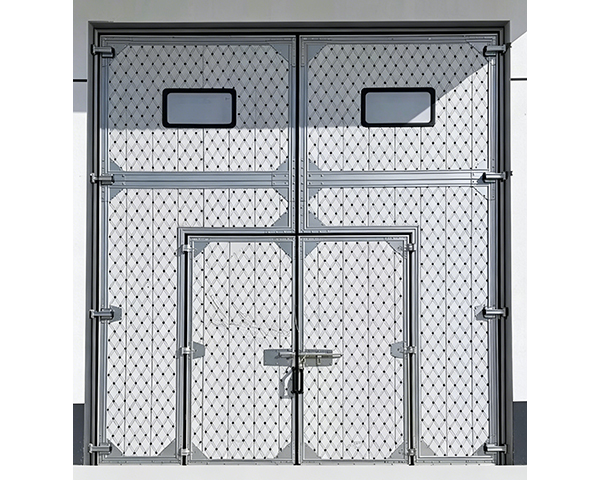
Automatic high speed industrial doors are designed to improve workflow, control access, and support efficient
operation in demanding commercial and industrial environments. These doors open and close quickly, help reduce
air exchange between spaces, and provide a practical solution for facilities that require frequent movement of
people, goods, vehicles, or equipment. In warehouses, factories, logistics centers, cold storage areas, clean
rooms, and processing plants, the right automatic high speed industrial door can improve productivity while
supporting safety, hygiene, and energy management.
This page explains the main benefits, features, common applications, technical specifications, material options,
and selection factors for automatic high speed industrial doors. The information is general and industry-focused,
making it suitable for blog content, category pages, landing pages, directory pages, and SEO-friendly industrial
website content.
An automatic high speed industrial door is a mechanized door system built for rapid opening and closing cycles in
high-traffic industrial settings. Unlike standard doors, these systems are engineered for speed, durability, and
operational efficiency. They typically use an electric motor, control panel, sensors, safety devices, and a
flexible or rigid door curtain to perform repeated cycles throughout the day.
The main purpose of an automatic high speed industrial door is to reduce downtime, maintain environmental
separation, and improve traffic flow. Because these doors operate faster than conventional industrial doors, they
can limit heat loss, dust entry, contamination, and unnecessary exposure between different zones.
In modern industrial facilities, every second matters. Open entry points can create energy loss, hygiene risks,
temperature instability, and inefficient movement patterns. Automatic high speed industrial doors address these
issues by creating a controlled barrier that opens only when needed and closes quickly after each passage.
They are especially valuable in environments where doors may be opened dozens or hundreds of times per day. Fast
cycle speed, automated control, and strong sealing performance make these doors a smart choice for businesses
seeking better operational control and long-term cost savings.
| Benefit | Description | Industrial Value |
|---|---|---|
| Fast Opening and Closing | Opens and closes within seconds to reduce waiting time and traffic delays. | Improves workflow efficiency and lowers congestion. |
| Energy Savings | Minimizes air exchange between indoor and outdoor areas or between controlled zones. | Helps reduce heating, cooling, and HVAC workload. |
| Temperature Control | Supports stable internal temperatures in chilled, heated, or climate-sensitive areas. | Useful for cold storage, food production, and clean environments. |
| Improved Hygiene | Limits dust, debris, insects, and airborne contaminants from entering protected areas. | Important for food, pharmaceutical, and cleanroom applications. |
| Traffic Efficiency | Provides smooth movement for forklifts, carts, personnel, and automated equipment. | Reduces bottlenecks and improves site productivity. |
| Enhanced Safety | Often equipped with sensors, soft edges, photocells, and emergency release functions. | Supports safer operation in busy industrial areas. |
| Noise Reduction | Creates a barrier that can help reduce sound transfer between spaces. | Improves comfort and zone separation in manufacturing sites. |
| Durability | Built for repeated cycles and harsh industrial conditions. | Reduces maintenance frequency and supports long service life. |
Most automatic high speed industrial doors use an intelligent control system that manages opening and closing
cycles. Activation methods may include push buttons, radar sensors, motion detectors, pull cords, remote control,
access systems, loop detectors, or integration with warehouse automation. The automatic operation helps reduce
manual handling and improves consistency.
Speed is a defining feature of these doors. Rapid opening and closing help maintain productivity and reduce the
time that the opening remains exposed. In many industrial environments, the faster cycle speed directly supports
energy conservation, contamination control, and traffic flow optimization.
Safety is essential in industrial door design. Common protective features include infrared photocells, safety
light curtains, bottom safety edges, obstacle detection, emergency stop buttons, and automatic reversal systems.
These features help prevent accidents and ensure safe movement in busy working environments.
Depending on the type of door, the moving section may be a flexible PVC curtain, reinforced fabric, aluminum
panel, or insulated rigid panel. The material is chosen based on application requirements such as impact
resistance, insulation, visibility, hygiene, and operating conditions.
High speed industrial doors are often designed with side guides, bottom seals, and close-fitting structures to
reduce air leakage. Some models also offer wind-resistant construction for areas exposed to pressure differences,
strong airflow, or external weather conditions.
Industrial users prefer systems that can operate reliably with minimal interruption. Automatic high speed
industrial doors are generally built with wear-resistant parts, simplified mechanics, and easy-access components
to support maintenance efficiency and lower total ownership costs.
| Door Type | Main Material | Best Use |
|---|---|---|
| High Speed Roll Up Door | PVC curtain or reinforced fabric | Warehouses, logistics zones, and internal passages |
| High Speed Folding Door | Fabric, composite, or insulated panels | Large openings, windy areas, and external entrances |
| High Speed Stack Door | Flexible curtain with stacked sections | Wide openings and frequent traffic routes |
| Insulated High Speed Door | Insulated panel or insulated curtain | Cold storage, temperature-controlled rooms, and energy-sensitive areas |
| Cleanroom High Speed Door | Antistatic or hygienic surface materials | Pharmaceutical, electronics, and controlled environments |
| Self-Repairing High Speed Door | Flexible curtain with reset function | Areas with frequent forklift or cart contact |
Automatic high speed industrial doors are widely used across many industries because they combine speed, control,
and durability. Their versatility makes them suitable for both internal and external applications.
| Industry | Typical Application | Key Requirement |
|---|---|---|
| Warehousing | Loading bays, transfer areas, and internal corridors | Fast traffic flow and energy efficiency |
| Logistics and Distribution | Parcel movement zones and packing areas | Reduced waiting time and operational speed |
| Food Processing | Ingredient handling, packaging, and production zones | Hygiene, dust control, and temperature stability |
| Cold Storage | Refrigerated rooms and freezer entrances | Thermal insulation and reduced air exchange |
| Pharmaceutical | Controlled production and storage zones | Cleanliness and contamination prevention |
| Manufacturing | Machine zones, assembly lines, and transfer points | Workflow efficiency and safety |
| Automotive | Workshop passages and production access points | Frequent opening cycles and durability |
| Chemical and Laboratory | Restricted access areas and separation zones | Environmental control and process safety |
When evaluating automatic high speed industrial doors, it is important to compare technical specifications that
affect performance, compatibility, and long-term reliability. The right specifications depend on the application,
opening size, operating frequency, and environmental conditions.
| Specification | Typical Range | Why It Matters |
|---|---|---|
| Opening Speed | Up to 1.0–2.5 m/s or more | Determines traffic efficiency and exposure time |
| Closing Speed | Controlled fast closing with safety logic | Helps reduce energy loss and contamination risk |
| Door Size | Customized according to opening dimensions | Must match site layout and traffic needs |
| Cycle Life | Designed for high-frequency daily use | Important for busy industrial environments |
| Wind Resistance | Standard to high wind-load options | Necessary for exposed entrances and large openings |
| Insulation Performance | Varies by material and design | Affects energy savings and temperature control |
| Control Voltage | Common industrial electrical configurations | Must be compatible with local electrical systems |
| Operating Temperature | Depends on curtain and hardware materials | Relevant for cold, hot, or outdoor conditions |
PVC is one of the most common materials for automatic high speed industrial doors. It is flexible, lightweight,
and cost-effective. PVC curtains often provide good visibility, fast movement, and smooth operation. They are
suitable for many indoor industrial applications where speed and basic environmental separation are the priority.
Reinforced fabric provides additional strength and tear resistance. This option is often used in doors that must
handle repeated cycles, moderate impact, or more demanding industrial conditions. It can also support a balance
between flexibility and durability.
Aluminum components are commonly used in structural parts, guides, and rigid panel systems. Aluminum offers good
corrosion resistance, light weight, and structural strength. It is often selected for doors that require a more
rigid form or better resistance to environmental exposure.
Insulated panel doors are suitable for facilities where thermal performance is a priority. These materials help
maintain consistent internal conditions and can be valuable in cold rooms, freezer rooms, and temperature
sensitive production spaces.
Automatic high speed industrial doors must be safe for operators, forklift drivers, pedestrians, and facility
visitors. Safety features are a key part of the product value and should be considered during selection.
| Safety Feature | Function | Benefit |
|---|---|---|
| Photocell Sensor | Detects objects or people in the door path | Prevents accidental contact or closure |
| Safety Edge | Stops or reverses the door if resistance is detected | Improves impact protection |
| Radar Sensor | Detects movement near the door opening | Enables contactless activation |
| Emergency Stop | Allows immediate system shutdown | Provides rapid intervention during incidents |
| Manual Release | Allows manual use during power failure or maintenance | Supports operational continuity |
| Obstacle Reversal | Reverses movement when obstruction is detected | Reduces risk of damage and injury |
Energy efficiency is one of the strongest reasons to install automatic high speed industrial doors. In many
facilities, open doorways cause substantial heating and cooling loss. When a door remains open too long, indoor
air escapes and outside air enters, forcing HVAC systems to work harder.
Because these doors open and close rapidly, the open time is minimized. This lowers uncontrolled airflow and
helps stabilize internal temperatures. In climate-controlled buildings, this can translate into lower energy
consumption, better process stability, and more predictable operating costs.
In sectors such as food processing, pharmaceuticals, and clean manufacturing, hygiene is a major concern.
Automatic high speed industrial doors help create a physical barrier between production zones and external
environments. Their quick action reduces the time contaminants have to enter protected areas.
When combined with proper sealing, smooth surfaces, and suitable activation systems, these doors can support
cleaner workflows, better process separation, and improved compliance with site standards.
Productivity in industrial facilities often depends on continuous movement. Delays at entry points can slow down
material transport, vehicle flow, and employee movement. Automatic high speed industrial doors reduce those
delays by opening quickly when needed and closing immediately after passage.
This faster movement can improve loading and unloading operations, reduce congestion around docks, and create
more efficient routing within the facility. Over time, these time savings can have a measurable effect on total
output and operational performance.
Choosing the right automatic high speed industrial door requires a clear understanding of the facility’s needs.
The best option depends on usage intensity, environmental conditions, door opening size, safety demands, and
process requirements.
| Selection Factor | Questions to Ask | Impact on Choice |
|---|---|---|
| Traffic Frequency | How many openings occur per day? | Determines required cycle life and speed |
| Environmental Control | Is temperature, hygiene, or dust control important? | Guides material and sealing selection |
| Opening Size | What are the exact width and height requirements? | Influences structural design and motor capacity |
| Impact Risk | Will forklifts or vehicles pass through frequently? | Affects durability and self-repair needs |
| Wind and Pressure | Is the opening exposed to drafts or external weather? | Determines wind-resistant construction needs |
| Hygiene Requirements | Does the area require clean, smooth, or easy-to-wash surfaces? | Influences surface finish and door type |
| Automation Integration | Will the door connect to sensors or access control systems? | Determines control compatibility |
Regular maintenance helps keep automatic high speed industrial doors in safe working condition. Common maintenance
tasks include checking the motor, guide rails, control system, sensors, seals, and moving components. It is also
important to inspect the curtain or panel for wear, damage, or alignment issues.
Preventive maintenance can reduce unplanned downtime, extend service life, and help maintain smooth operation in
busy industrial environments. Facilities should follow a routine inspection schedule based on usage intensity and
operating conditions.
Automatic high speed industrial door benefits, automatic high speed industrial door features, high speed industrial
door for warehouse, industrial rapid door solutions, automatic roll up industrial door, high speed door for cold
storage, energy saving industrial door, hygienic industrial door system, fast opening industrial door, automatic
door for logistics center, high cycle industrial door, insulated high speed door, safety features of industrial
speed doors, and durable high speed door for manufacturing are all relevant keyword phrases that can help target
search intent for commercial and industrial audiences.
| Term | Meaning |
|---|---|
| Cycle Life | The number of opening and closing cycles a door is designed to handle. |
| Door Curtain | The flexible moving section of the door, often made from PVC or fabric. |
| Operator | The motorized unit that drives the door system. |
| Photocell | A sensor that detects objects in the door path. |
| Safety Edge | A protective edge that reacts when the door meets an obstacle. |
| Control Panel | The electrical unit that manages door movement and safety logic. |
Automatic high speed industrial doors provide a strong combination of speed, safety, hygiene, energy efficiency,
and operational control. They are built for demanding environments where frequent access and environmental
separation are both important. By using advanced automation, durable materials, and reliable safety features,
these doors help modern industrial facilities operate more efficiently.
Whether the goal is to improve warehouse traffic, support temperature control, reduce contamination, or enhance
workplace productivity, an automatic high speed industrial door can deliver measurable value. Their adaptable
design makes them suitable for many sectors, and their performance benefits continue to support industrial
efficiency across a wide range of applications.
```
เสิ่นหยาง Manlong Metal Products Co., Ltd.


ลิขสิทธิ์ © 2026 Shenyang Manlong Metal Products Co., Ltd. สงวนลิขสิทธิ์ แอปพลิเคชัน
เว็บไซต์นี้ใช้คุกกี้เพื่อให้แน่ใจว่าคุณได้รับประสบการณ์ที่ดีที่สุดบนเว็บไซต์ของเรา

 English
 Español
 Portugues
 Pусский
 Français
 Deutsch
 العربية
 Türk dili
 Tiếng Việt



 โทรศัพท์
ความคิดเห็น
(0)