

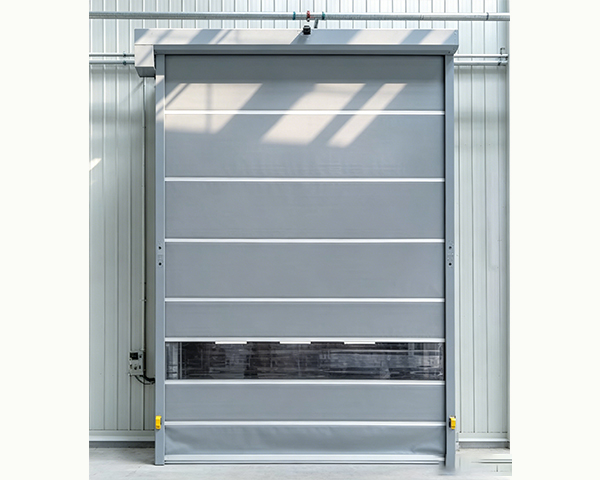
A Heavy Duty Flexible Gate for Industrial Loading Areas is a robust access-control solution designed to manage movement, improve safety, and support operational efficiency in warehouses, distribution centers, manufacturing plants, logistics hubs, and other high-traffic industrial environments. Unlike rigid barriers or fully fixed metal gates, a flexible gate is engineered to provide controlled access while withstanding frequent use, minor impacts, and the demanding conditions commonly found in loading docks and industrial entry points.
In industrial loading areas, safety and workflow depend on reliable access management. Vehicles, pallet jacks, forklifts, workers, contractors, and delivery personnel often share the same space. A heavy duty flexible gate helps define boundaries, reduce unauthorized entry, and protect sensitive zones without creating unnecessary bottlenecks. Because these gates are designed with flexibility in mind, they can absorb contact and return to position more effectively than many rigid alternatives, making them especially suitable for busy loading environments.
This content is written for SEO-friendly industrial use cases and is suitable for blogs, category pages, product overview pages, and industry resource sections. It focuses on general information, specifications, advantages, applications, and buying considerations related to heavy duty flexible gate systems for industrial loading areas.
A heavy duty flexible gate is a durable industrial gate system designed to control access in high-use areas while offering a degree of flexibility that helps it resist damage from routine contact. In loading areas, this type of gate is often used to separate pedestrian paths from vehicle routes, protect dock edges, mark restricted zones, and support safe traffic management.
The term flexible gate generally refers to a gate structure that can bend, flex, absorb impact, or pivot without permanent deformation under standard operating conditions. This flexibility may come from specialized materials, modular construction, spring-assisted mechanisms, or impact-resistant design elements. The “heavy duty” aspect indicates stronger materials, reinforced joints, industrial-grade hardware, and higher performance for demanding environments.
Compared with decorative or light-duty gates, a heavy duty flexible gate is intended for continuous industrial operation. It is commonly specified where forklift traffic, pallet movement, repetitive opening and closing, and exposure to dust, moisture, and fluctuating temperatures are expected.
Industrial loading areas are dynamic work zones. They often experience constant movement, limited visibility, and changing operational patterns throughout the day. A flexible gate system can improve site organization and help manage these challenges more effectively than basic signage or temporary barriers.
Key reasons industrial loading areas use heavy duty flexible gates include:
In loading docks, fast movement is essential. However, speed should never compromise safety. A flexible gate helps businesses balance both priorities by creating a controlled, durable entry point that can handle the realities of industrial operations.
Heavy duty flexible gates are used in a wide variety of industrial and commercial environments. Their versatility makes them suitable for permanent installations and operational safety upgrades in many facility types.
| Application Area | Typical Use | Benefit |
|---|---|---|
| Loading docks | Control access to shipment and receiving zones | Improves traffic control and protects dock operations |
| Warehouse aisles | Separate pedestrians from material handling routes | Enhances safety and route organization |
| Manufacturing plants | Restrict access to machinery or work cells | Supports safety compliance and zone control |
| Distribution centers | Manage high-volume package and pallet movement | Reduces congestion and access confusion |
| Cold storage facilities | Protect temperature-controlled zones | Helps maintain operational boundaries |
| Parking and service areas | Control entry for staff and delivery vehicles | Improves security and site management |
| Maintenance zones | Limit access to repair or equipment areas | Reduces accidental entry and related risk |
These gates are especially helpful in facilities where access rules change throughout the day. For example, a loading bay may need open access during certain receiving hours and restricted access during equipment servicing or high-risk operations. A flexible gate provides the practical control needed for these shifting conditions.
Although designs vary, most heavy duty flexible gates for industrial loading areas share several important features. These features are selected to support durability, visibility, and long-term operational performance.
In an industrial setting, visibility is just as important as strength. A gate must be easy to see, easy to operate, and capable of withstanding repeated exposure to forklifts, carts, hand trucks, and pedestrian movement.
The main reason facilities choose a heavy duty flexible gate is the combination of strength and adaptability. These systems provide practical benefits that support both safety and daily operations.
Industrial loading areas are among the most active zones in a facility. A flexible gate helps define movement paths and reduce the chance of accidental entry into hazardous areas. It can act as a physical reminder that a section is restricted, which is more effective than floor markings alone.
Loading zones often have conflicting traffic flows. Trucks arrive, pallets move, workers cross pathways, and equipment may be operating simultaneously. A gate helps organize these movements by creating an obvious boundary and supporting controlled access.
Heavy duty flexible gates are designed for environments where minor impacts are likely. Instead of becoming easily bent or broken, they are built to flex or absorb contact, helping extend service life and reduce repair needs.
While industrial-grade gates may require a higher initial investment than temporary barriers, they can provide strong long-term value through reduced maintenance, fewer replacements, and improved operational stability.
Loading areas vary from one facility to another. Some spaces are narrow and enclosed, while others are open and high traffic. Flexible gate systems can often be configured to match the layout and access requirements of the site.
Clear access control contributes to a more professional and efficient facility appearance. It signals that safety, order, and workflow discipline are built into the operation.
Material selection is a major factor in performance. The best material depends on the environment, expected traffic, and required durability. Heavy duty flexible gates may use one or more of the following:
| Material Type | Common Characteristics | Best For |
|---|---|---|
| Powder-coated steel | Strong, durable, and suitable for high-impact use | General industrial loading areas |
| Galvanized steel | Improved corrosion resistance for humid or outdoor conditions | Dock entrances and exterior access points |
| Aluminum components | Lightweight with good corrosion resistance | Areas needing reduced weight and easy operation |
| High-strength polymer | Flexible, impact-resistant, and low-maintenance | Zones requiring energy absorption and visibility |
| Composite material | Combines strength, flexibility, and weather resistance | Mixed indoor-outdoor applications |
In many industrial applications, coated metal remains one of the most common choices because it offers a strong balance of strength, visibility, and resistance to damage. However, flexible polymer or composite components may be preferred when impact absorption is a top priority.
Safety is one of the strongest SEO and operational topics related to industrial loading areas. A heavy duty flexible gate contributes to safety in several ways. It creates a clear barrier, establishes boundaries, and helps prevent people from entering dangerous paths or work zones without authorization.
For example, a loading area may include forklift routes, trailer access points, dock levelers, and staging areas for goods. Without proper access control, workers may unknowingly step into equipment lanes. A flexible gate helps define where pedestrians may and may not go, reducing risk and supporting safer behavior.
It can also be useful during maintenance work or temporary shutdowns. If a dock door, conveyor section, or machinery bay is being serviced, a gate can be closed to discourage entry and create a visible restriction until operations resume.
In many facilities, safety success depends on layers of control. Flexible gates work best when combined with signs, floor marking, guardrails, warning lights, training, and site procedures.
The following table provides a general specification guide for industrial loading area gate systems. Exact values vary by design and manufacturer, but this overview helps define common industry expectations.
| Specification Category | Typical Range or Option | Notes |
|---|---|---|
| Gate width | Custom or standard widths from narrow passages to wide dock openings | Measured based on opening size and required clearance |
| Gate height | Low, medium, or full-height configurations | Selected according to traffic type and visibility needs |
| Load resistance | Designed for frequent contact and industrial use | Varies depending on structural reinforcement |
| Finish | Powder-coated, galvanized, painted, or composite surface | Chosen for durability and corrosion resistance |
| Operation type | Swing, pivot, folding, sliding, or flexible return design | Depends on available space and user requirements |
| Locking method | Manual latch, keyed lock, padlock point, or controlled-access lock | Useful for security-sensitive zones |
| Mounting method | Floor-mounted, wall-mounted, post-mounted, or integrated support | Selected based on installation conditions |
| Visibility features | Bright color, reflective tape, warning bands | Improves awareness in busy areas |
| Environmental rating | Indoor, semi-outdoor, or outdoor capable | Depends on material and finish |
Choosing the right heavy duty flexible gate starts with understanding the site layout and operational needs. A loading area gate is not a one-size-fits-all solution. The best selection should reflect how people and equipment move through the space.
The first consideration is the size of the opening. The gate must fit the access point without obstructing movement when open. If the gate is too narrow, it may slow operations. If it is too wide or poorly matched to the area, it may reduce visibility or function.
In many industrial loading areas, one of the main goals is separating foot traffic from vehicles. A flexible gate should support this objective by clearly marking where pedestrians may enter and where they should stop.
If the gate will be opened and closed many times per shift, it should be built for repeated operation. High-frequency environments require smooth functionality and durable hardware to avoid downtime.
Loading areas may be indoors, outdoors, or partially exposed to weather. Temperature changes, moisture, dust, cleaning chemicals, and UV exposure may affect performance. Materials and coatings should be selected accordingly.
Maintenance teams must be able to inspect, clean, and service the gate easily. A system that is difficult to maintain may create long-term operational issues. Simplicity often improves reliability.
Many facilities follow internal safety standards or site-specific requirements that influence gate design. These may include color coding, clearance rules, emergency access requirements, and pedestrian protection strategies.
Both flexible gates and traditional rigid gates have a role in industrial environments, but they serve slightly different priorities. Understanding the difference can help facility managers choose the most suitable solution.
| Feature | Heavy Duty Flexible Gate | Traditional Rigid Gate |
|---|---|---|
| Impact response | Can flex or absorb contact | More likely to deform under impact |
| Maintenance | Often lower if designed for repeated contact | May require more repairs after collisions |
| Traffic suitability | Well suited for busy loading areas | Better for strict static security points |
| Space efficiency | Can be compact and adaptable | Often needs more clearance depending on design |
| Visibility | Often designed with high-visibility features | May require added markings or signage |
Rigid gates are still useful in secure perimeter applications where strength and fixed structure are the priority. Flexible gates, however, are often a better fit for loading areas where contact, movement, and operational flow are daily realities.
Proper installation is essential for performance and safety. Even a high-quality heavy duty flexible gate can underperform if it is incorrectly mounted or not aligned with site traffic patterns.
Installation planning should always reflect the actual traffic pattern of the facility. A gate positioned in the wrong place may create congestion or be bypassed by workers, reducing its effectiveness.
Like all industrial equipment, flexible gates perform best when they are regularly inspected and maintained. Routine checks help identify wear early and reduce the risk of failure during busy operations.
Common maintenance practices include:
Facilities should also consider seasonal inspection routines, especially for outdoor or semi-outdoor loading areas. Moisture, freezing temperatures, intense sunlight, and airborne debris can all affect long-term gate performance.
Selecting the right heavy duty flexible gate depends on operational priorities. A facility focused on pedestrian safety may need a different design than one focused on equipment separation or access restriction.
| Selection Factor | What to Evaluate | Why It Matters |
|---|---|---|
| Traffic volume | How many people and vehicles pass through daily | Influences durability and operation style |
| Type of traffic | Forklifts, pedestrians, carts, trucks, or mixed use | Determines impact and visibility requirements |
| Space available | Width, height, and clearance constraints | Affects gate configuration and movement |
| Environmental exposure | Indoor, outdoor, humidity, dust, chemicals, temperature | Guides material and finish selection |
| Security needs | Open access control or restricted entry | Determines locking and locking-access options |
| Maintenance capacity | Ability to inspect and service the gate regularly | Supports reliable long-term use |
For best results, the gate should match both the immediate use case and the broader workflow of the facility. The right choice helps prevent delays, improve safety, and support smoother loading area operations.
For web pages, blogs, and industrial product categories, relevant search terms often include the following keyword variations:
Using these terms naturally throughout headings, body content, specifications, and FAQs can help search engines understand the page topic more clearly. However, keyword usage should remain readable and relevant rather than forced.
A heavy duty flexible gate is used to control access, improve safety, and manage traffic in industrial environments such as loading areas, warehouses, docks, and manufacturing facilities.
Yes, many flexible gate systems are designed for use in areas with forklift traffic. Their impact-resistant and durable construction makes them suitable for high-use industrial settings, provided they are properly specified and installed.
Yes. They help separate pedestrians from equipment, mark restricted zones, and reduce unauthorized entry into hazardous areas. They are commonly used as part of a broader warehouse safety strategy.
Many heavy duty flexible gates are suitable for outdoor or semi-outdoor use, especially when made with corrosion-resistant materials and protective finishes.
The right size depends on opening width, available clearance, traffic type, and the intended function of the gate. It is important to measure the installation area carefully before selecting a gate configuration.
Yes. Regular inspection of hardware, alignment, surface condition, and operating function helps maintain safety and extend service life.
A Heavy Duty Flexible Gate for Industrial Loading Areas is a practical, durable, and versatile access-control solution for facilities that need reliable safety management in active work environments. By combining impact-resistant construction with clear visual boundaries and controlled access, these gates support efficient loading operations, protect workers, and help organize traffic flow.
Whether used in warehouses, dock areas, distribution centers, manufacturing sites, or service corridors, a flexible gate offers a strong balance of durability and adaptability. Its ability to handle frequent use while maintaining safety value makes it a useful component in modern industrial site design.
For businesses planning an access-control upgrade, heavy duty flexible gates provide a dependable option that aligns well with industrial safety goals, operational efficiency, and long-term facility management needs.
เสิ่นหยาง Manlong Metal Products Co., Ltd.


ลิขสิทธิ์ © 2026 Shenyang Manlong Metal Products Co., Ltd. สงวนลิขสิทธิ์ แอปพลิเคชัน
เว็บไซต์นี้ใช้คุกกี้เพื่อให้แน่ใจว่าคุณได้รับประสบการณ์ที่ดีที่สุดบนเว็บไซต์ของเรา

 English
 Español
 Portugues
 Pусский
 Français
 Deutsch
 العربية
 Türk dili
 Tiếng Việt



 โทรศัพท์
ความคิดเห็น
(0)