

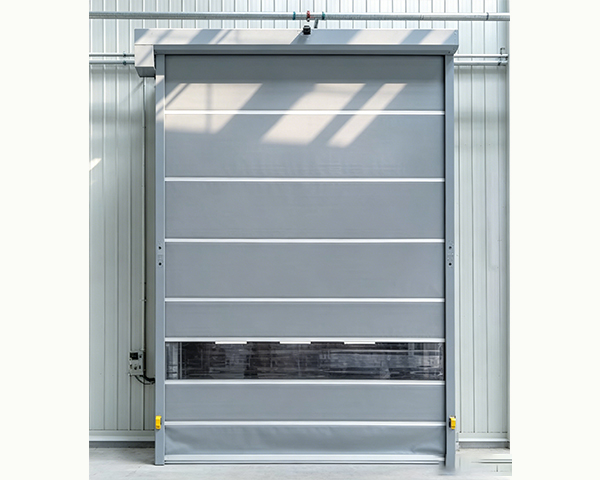
Industrial doors are essential components in warehouses, factories, logistics centers, cold storage facilities, manufacturing plants, and commercial loading areas. As modern facilities demand higher levels of efficiency, security, and operational control, industrial door safety features and smart control systems have become critical for reliable daily performance. These systems are designed to improve worker protection, reduce equipment damage, optimize traffic flow, support automation, and help facilities meet safety and operational standards.
Today’s industrial door solutions are no longer limited to simple open-and-close mechanisms. They often include intelligent sensors, programmable controllers, remote access functions, safety edges, emergency stop systems, obstacle detection, communication interfaces, and real-time monitoring tools. Together, these features create a smarter, safer, and more efficient access control environment. For businesses that rely on heavy-duty doors, understanding the value of industrial door safety features and smart control systems is essential for long-term performance and compliance.
Industrial door safety features refer to the mechanical, electrical, and electronic protection mechanisms built into industrial doors to prevent accidents, reduce hazards, and ensure controlled operation. These features are designed to protect people, vehicles, goods, and surrounding equipment from injury or damage caused by fast-moving, heavy, or automated doors.
Because industrial doors operate in high-traffic environments, safety is not optional. A reliable door safety system can detect obstructions, stop door movement in emergencies, prevent unauthorized access, and minimize the risk of collision or entrapment. In many facilities, these features are also important for maintaining operational continuity and meeting workplace safety requirements.
Smart control systems are advanced operating systems that allow industrial doors to be managed more efficiently through automation, sensors, digital interfaces, programmable logic, and remote monitoring. These systems enable precise control over door opening speed, closing timing, access permissions, usage tracking, and integration with other building systems.
In a smart facility, industrial doors can communicate with loading bays, vehicle detection units, fire alarms, access control systems, and building management platforms. This helps streamline operations, improve energy efficiency, reduce manual work, and enhance security. Smart control systems are especially valuable in modern warehouses, distribution centers, and production environments where speed, safety, and accuracy are essential.
Industrial doors are typically larger, heavier, and faster than standard commercial doors. This makes them highly efficient, but also potentially dangerous if not properly controlled. Safety features are necessary because industrial doors often operate in environments where forklifts, pallet trucks, workers, machinery, and vehicles move continuously.
The main reasons industrial door safety features matter include:
For these reasons, safety features should be considered a core part of industrial door design, not just an optional upgrade.
There are many types of industrial door safety features, and the exact combination depends on the door type, usage environment, and operational requirements. Below are the most common and important safety functions used in modern industrial door systems.
| Safety Feature | Function | Main Benefit |
|---|---|---|
| Photoelectric Sensors | Detect movement or objects in the door path | Prevents collision and entrapment |
| Safety Edge | Stops or reverses the door when pressure is detected | Protects people and vehicles from impact |
| Obstacle Detection | Identifies objects blocking the door opening or closing path | Reduces damage and improves safe operation |
| Emergency Stop Button | Immediately stops door movement during emergencies | Supports fast response in unsafe situations |
| Manual Release System | Allows door operation during power failure | Ensures access continuity and emergency use |
| Overload Protection | Stops the motor if resistance is too high | Protects motor and mechanical components |
| Anti-Drop Device | Prevents sudden door fall if a lifting component fails | Improves operator safety |
| Light Curtain | Creates a sensing zone across the opening | Detects presence before closing |
Photoelectric sensors are one of the most widely used industrial door safety features. They create an invisible detection line across the door opening and can identify whether a person, pallet, or vehicle is present. If something is detected, the door can stop or reverse automatically.
This feature is especially important for fast-moving doors in busy environments. Photoelectric sensors are often installed near loading docks, warehouse entrances, and automated production areas to prevent accidents. They are also helpful in facilities where visibility is limited or where traffic is frequent and unpredictable.
A safety edge is installed along the closing edge of an industrial door. When the edge makes contact with an object or person, it triggers an immediate stop or reverse action. This helps reduce the risk of crushing or pinching injuries.
Safety edges are particularly useful for sectional doors, rolling doors, and high-speed industrial doors. They provide a direct physical response and serve as an important secondary protection layer alongside sensor-based systems. In many installations, a safety edge is considered a basic but essential industrial door safety feature.
Emergency stop systems allow operators to halt door movement instantly if a dangerous situation occurs. This may be necessary during equipment failure, obstructions, fire-related incidents, or unexpected human entry into the door zone.
Manual override or manual release functions are equally important. In the event of a power outage, system fault, or emergency evacuation, the door can still be opened or closed manually. This function supports safe access and business continuity when automated control is unavailable.
Obstacle detection systems are designed to identify interference in the door movement path before a collision occurs. These systems may use infrared beams, radar sensors, pressure edges, or integrated motor monitoring to determine whether the door should continue, stop, or reverse.
Reversal technology is especially valuable in automated industrial settings because it reduces the chance of damage to goods and equipment. It also lowers the risk of workplace injury by ensuring the door reacts immediately to unexpected obstruction.
Industrial doors, especially large overhead or vertically moving doors, must be equipped with protective devices that reduce the risk of uncontrolled falling. Anti-drop systems are designed to activate if a lifting component, spring, cable, or support mechanism fails.
This type of safety feature is crucial because industrial doors are often heavy enough to cause serious injury or major damage if they fall suddenly. Mechanical protection systems may also include lock mechanisms, tension controls, braking systems, and reinforced support components to ensure stable operation.
Smart control systems improve the way industrial doors are monitored, activated, and integrated into facility workflows. Instead of relying only on manual switches or basic remotes, smart systems allow greater precision, more automation, and more detailed operational control.
With a smart control system, facility managers can program opening schedules, set access conditions, monitor door status remotely, connect the door with vehicle detection systems, and optimize the timing of opening and closing actions. This can reduce energy loss, improve traffic speed, and support better security management.
| Smart Control Function | Description | Typical Application |
|---|---|---|
| Remote Operation | Allows door control from a distance using a transmitter or digital interface | Warehouse and loading bay access |
| Automatic Opening | Opens the door based on detected movement or signal input | Vehicle entry and high-traffic zones |
| Timed Closing | Closes the door after a set delay or condition | Energy control and security |
| Access Control Integration | Connects with card readers, keypads, or ID systems | Restricted industrial areas |
| Traffic Sensor Input | Responds to forklifts, vehicles, or personnel movement | Logistics and loading operations |
| System Monitoring | Tracks usage, faults, and door position | Maintenance and operational supervision |
| Building Management Integration | Works with centralized facility control systems | Smart factories and modern warehouses |
| Fault Alerts | Notifies users of performance issues or errors | Preventive maintenance planning |
Smart control systems offer many advantages for industrial and commercial facilities. These benefits are not limited to convenience; they also support safety, productivity, and cost management.
These benefits make smart control systems a valuable part of modern industrial door design, especially in facilities that prioritize speed, safety, and digital management.
Smart industrial door systems can be operated through a variety of input methods. Each control method serves a different purpose depending on the application, security level, and traffic pattern.
| Control Method | How It Works | Best Use Case |
|---|---|---|
| Push Button Panel | Manual wall-mounted button for open/close control | Basic internal operations |
| Remote Transmitter | Wireless device sends a signal to operate the door | Vehicle and equipment access |
| Keypad Entry | Requires a code to activate the door | Controlled entry areas |
| Card or Badge Reader | Door opens when a registered card is presented | Staff access control |
| Motion Sensor | Detects movement and automatically triggers opening | High-traffic zones |
| Vehicle Loop Detector | Detects a vehicle through embedded sensing equipment | Loading docks and gate systems |
| App or Digital Interface | Allows control through a smart device or connected platform | Remote monitoring and management |
A complete industrial door system often includes multiple components that work together to improve safe operation and smart control. These components may vary by door type, but the most common elements are listed below.
These parts support the door’s ability to operate safely and reliably in demanding industrial conditions. The exact specification should always match the application environment and expected usage frequency.
Different facilities require different safety configurations. A cold storage facility may focus on fast closing and temperature control, while a factory may prioritize collision prevention and personnel protection. A logistics center may require smart traffic coordination, while a clean room may need sealed and controlled access.
| Application | Important Safety Features | Common Smart Control Needs |
|---|---|---|
| Warehouse | Obstacle detection, photoelectric sensors, safety edge | Remote opening, traffic sensing, access control |
| Loading Dock | Emergency stop, reversing system, warning signals | Vehicle detection, timed operation, system monitoring |
| Manufacturing Plant | Light curtain, anti-drop device, overload protection | Scheduled control, equipment integration |
| Cold Storage | Fast close, safety sensors, manual release | Energy-saving control, automatic closure |
| Clean Room | Controlled access, sealing support, contact protection | Access authorization, process synchronization |
| Logistics Hub | Collision prevention, obstruction sensing, emergency stop | High-speed traffic control, remote management |
When evaluating industrial door safety features and smart control systems, facilities often review technical specifications to ensure the system matches operational needs. The table below gives general industry-oriented specification ranges and functions. These are not brand-specific values, but common reference points for planning purposes.
| Specification Item | Typical Range or Feature | Purpose |
|---|---|---|
| Operating Voltage | Common low-voltage control or standard industrial power supply | Supports safe electrical operation |
| Response Time | Fast detection and immediate stop/reverse reaction | Improves accident prevention |
| Sensor Type | Infrared, photoelectric, radar, pressure-based | Detects obstacles and movement |
| Control Mode | Manual, semi-automatic, fully automatic | Matches different operational needs |
| Communication Interface | Relay output, digital input, smart integration port | Connects with external systems |
| Protection Level | Industrial-grade enclosure and dust/moisture resistance | Supports harsh working environments |
| Emergency Features | Stop button, manual release, fault alarm | Improves safety during abnormal events |
| Usage Frequency | Designed for low, medium, or high-cycle operation | Ensures durability under workload |
Smart control systems do more than add convenience. They can significantly improve industrial door safety by coordinating sensor input, response timing, and access logic. For example, a smart controller can prevent the door from closing if a vehicle is still present, delay closure until a safe clearance is confirmed, or send alerts when a fault occurs.
This level of control reduces risk in environments with constant movement and many operational variables. Instead of depending on operator judgment alone, the system can make immediate decisions based on real-time data. That makes smart control an important part of modern industrial door safety architecture.
One of the major advantages of smart industrial door systems is their ability to improve energy efficiency. In temperature-controlled facilities, every second a door remains open can lead to heat loss, cold loss, or contamination risks. Smart systems help reduce unnecessary opening time and support precise closing cycles.
Automatic closing, motion-triggered access, and real-time door monitoring all contribute to better environmental control. This is especially important in cold storage, food processing, and climate-sensitive storage areas. By reducing air exchange and improving cycle control, smart industrial door systems can support energy management goals as well as safety objectives.
Security is another important benefit of industrial door smart control systems. Facilities can restrict access to authorized users, monitor entry patterns, and record door status in real time. This helps protect valuable inventory, machinery, and restricted work areas.
Smart control systems can also work with alarms, surveillance systems, and access authorization tools to create a more complete security strategy. When a door is opened outside approved hours or without proper authorization, alerts can be triggered quickly. This helps reduce theft, misuse, and unauthorized entry.
Industrial door safety features and smart control systems require regular inspection and maintenance to remain effective. Sensors should be checked for alignment and cleanliness, mechanical components should be examined for wear, and software or control logic should be verified as needed. Preventive maintenance helps ensure that safety systems continue to respond correctly.
Smart systems often provide usage data and fault notifications, which can make maintenance more efficient. By tracking the number of cycles, error events, and response behavior, facility managers can identify issues before they become serious failures. This improves reliability and extends the service life of the door system.
Industrial door safety features and smart control systems are now essential elements of modern industrial and commercial facility design. They improve workplace safety, protect equipment, support access control, reduce downtime, and enhance overall operational efficiency. Whether used in warehouses, factories, loading docks, cold storage, or logistics hubs, these systems help industrial doors perform more intelligently and reliably.
For businesses planning new installations or upgrading existing systems, focusing on industrial door safety features and smart control systems is a practical step toward safer, smarter, and more efficient operations. By combining reliable protection devices with advanced digital control, facilities can create a more secure and productive environment for daily use.
industrial door safety features, smart control systems for industrial doors, industrial door safety, industrial door automation, industrial door control systems, industrial door sensors, industrial door emergency stop, industrial door obstacle detection, smart industrial door solutions, industrial door access control, industrial door monitoring systems, warehouse door safety, loading dock door control, industrial door protection systems
เสิ่นหยาง Manlong Metal Products Co., Ltd.


ลิขสิทธิ์ © 2026 Shenyang Manlong Metal Products Co., Ltd. สงวนลิขสิทธิ์ แอปพลิเคชัน
เว็บไซต์นี้ใช้คุกกี้เพื่อให้แน่ใจว่าคุณได้รับประสบการณ์ที่ดีที่สุดบนเว็บไซต์ของเรา

 English
 Español
 Portugues
 Pусский
 Français
 Deutsch
 العربية
 Türk dili
 Tiếng Việt



 โทรศัพท์
ความคิดเห็น
(0)