

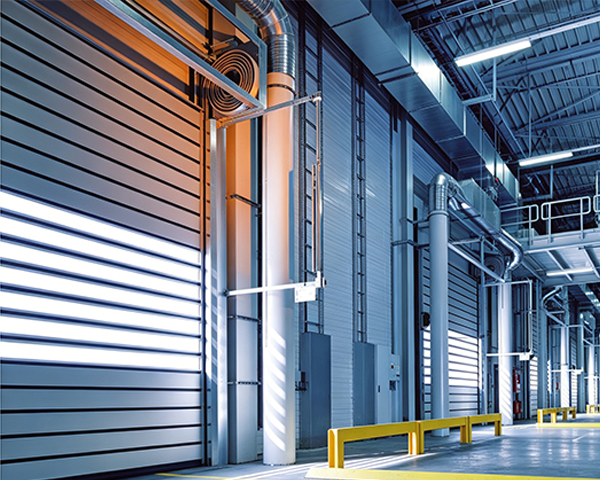
A Large Warehouse Rapid Stacking Door is a high-performance industrial door solution designed for
fast opening and closing, space-saving operation, and reliable performance in demanding logistics, storage,
distribution, manufacturing, and cold-chain environments. This guide provides a complete, SEO-friendly, and
industry-focused overview of Large Warehouse Rapid Stacking Door Installation, including definitions,
benefits, installation requirements, technical specifications, component explanations, project planning notes, and
maintenance guidance.
This content is written for use in blog posts, category pages, service pages, and industry landing pages. It is
intentionally brand-neutral and contains only general industry information, making it suitable for search engine
indexing and organic traffic growth.
A Large Warehouse Rapid Stacking Door is an industrial door system engineered for oversized openings
where speed, durability, and efficient space use are essential. Unlike standard swinging or sectional warehouse
doors, rapid stacking doors move vertically and fold or stack into multiple panels as they open. This design helps
reduce obstruction in front of and above the doorway while allowing frequent access for forklifts, pallets,
conveyor systems, and warehouse vehicles.
The term rapid stacking refers to the way the door curtain or door panels are lifted and stacked in
a controlled sequence. In large warehouse applications, the door must often cover wide openings, high openings, or
areas with strict temperature control. As a result, the installation process requires precise measurement,
structural preparation, electrical connection, and commissioning.
In modern logistics facilities, Large Warehouse Rapid Stacking Door Installation is often selected
because it combines efficiency, safety, and operational convenience. It is especially useful in facilities that
need fast cycle times, reduced air exchange, and improved workflow.
Proper installation is critical for any industrial door, but it becomes even more important for large-format rapid
stacking systems. Because these doors are used in high-traffic environments, even small alignment issues can affect
door speed, sealing, stability, and service life. A correct Large Warehouse Rapid Stacking Door Installation
Guide helps ensure the door performs safely and consistently.
Key reasons installation quality matters include:
Large warehouse doors are used in many industrial and commercial environments. Their fast operating speed and
space-saving design make them a practical option for busy access points.
| Application Area | Typical Use Case | Main Benefit |
|---|---|---|
| Logistics Centers | Frequent loading dock access and vehicle movement | Fast traffic flow and reduced waiting time |
| Warehouses | Large opening between storage zones or receiving areas | Efficient access with minimal floor obstruction |
| Cold Storage Facilities | Temperature-sensitive environments | Reduced air exchange and better climate control |
| Manufacturing Plants | Machine access, internal divisions, production bays | Quick throughput and controlled separation |
| Food Processing Facilities | Sanitary access and hygiene-sensitive areas | Better cleanliness and environmental separation |
| Distribution Hubs | High-cycle door usage during peak operations | Durability and speed for repeated operation |
Selecting the right industrial door can improve the overall performance of a facility. A large rapid stacking
design offers several important advantages.
Rapid stacking doors are designed to open and close quickly. This helps reduce idle time at busy warehouse
entrances and supports smooth workflow in high-traffic operations.
Because the door stacks vertically, it requires less side space and less overhead clearance than some traditional
industrial door types. This is useful in warehouses where every meter of usable space matters.
In temperature-controlled warehouses, faster closing times help reduce heat transfer, dust movement, and moisture
infiltration. This can contribute to better energy performance and product protection.
These doors are often built for frequent opening and closing. With the right installation and maintenance, they can
support heavy daily use in demanding industrial environments.
Forklifts, pallet jacks, and internal transport systems can move more efficiently when door opening times are
minimized. This reduces bottlenecks and improves productivity.
Large warehouse rapid stacking doors offer a clean, modern look that suits logistics hubs, factories, and advanced
distribution buildings.
Understanding the core components helps during planning, installation, inspection, and maintenance. While exact
configurations may vary, most large rapid stacking systems include the following parts.
| Component | Function | Installation Importance |
|---|---|---|
| Door Curtain or Panels | Forms the main closing surface of the door | Must be properly aligned for smooth stacking |
| Guide Tracks | Direct door movement along the opening path | Precision mounting is essential for stability |
| Top Roll / Stacking Mechanism | Controls the folding or stacking action | Requires accurate calibration and secure attachment |
| Drive Motor | Powers door movement | Electrical connection and torque matching are critical |
| Control Box | Manages operation and safety logic | Needs proper programming and commissioning |
| Safety Sensors | Detect obstacles and protect personnel | Must be tested after installation |
| Sealing System | Reduces air leakage, dust entry, and noise | Requires correct compression and contact |
| Support Frame | Provides structural mounting support | Must be level, strong, and anchored correctly |
Before installation begins, the project site must be checked carefully. Industrial door performance depends heavily
on the condition of the opening, structural support, and available space.
Large warehouse rapid stacking doors are heavier and more complex than standard doors. The building structure must
be capable of supporting the tracks, frame, motor unit, and moving loads. If the opening is unusually wide or
tall, additional reinforcement may be necessary.
The motor, sensors, and control unit require stable electrical supply. Voltage, frequency, and wiring capacity
should match the door system specifications. Electrical installation should always be completed according to
applicable local standards and safety codes.
Warehouse conditions can affect both installation and long-term performance. High humidity, dust, temperature
fluctuations, or corrosive environments may require special materials, sealing options, or protective coatings.
The exact installation process may vary depending on design, opening size, and door configuration. However, the
general sequence below reflects standard industrial practice for Large Warehouse Rapid Stacking Door
Installation.
Start by measuring the width, height, side clearance, and overhead space. Accurate measurement is essential
because even minor dimensional errors can affect door alignment, stacking clearance, and sealing performance.
Confirm that the wall, lintel, and surrounding structure can carry the required load. Check for cracks, uneven
surfaces, or instability that may interfere with frame installation.
Position the frame according to the manufacturer’s or project specification layout. The frame must be square,
vertical, and level before fixation. Improper frame geometry is one of the most common causes of future door
problems.
Fix the guide tracks and support components securely. Alignment is critical because the curtain or panels must move
smoothly without rubbing, binding, or drifting.
Lift and attach the door curtain or panel sections in the correct order. Ensure that all connections are secure and
that the stacking sequence is consistent with the design.
The motor unit and transmission components must be fixed firmly and aligned correctly. Torque settings, chain
tension, shaft coupling, or other transmission elements should be adjusted according to project requirements.
Connect the control box, motor wiring, safety devices, and switches. All wiring should be installed neatly,
protected from damage, and tested for continuity and correct function.
Install and test photoelectric sensors, bottom-edge protection, emergency stop controls, and any required warning
devices. Safety components are a critical part of industrial door installation.
Run the door through open and close cycles. Observe stacking motion, speed, noise level, balance, and sealing.
Listen for unusual sounds and check for mechanical interference.
After testing, make any necessary adjustments to travel limits, tension, control logic, and sensor positions.
Commissioning should end only when the door operates consistently and safely across multiple cycles.
Large warehouse projects often involve complex building conditions. Planning ahead helps reduce delays and rework.
| Common Challenge | Possible Cause | Typical Solution |
|---|---|---|
| Frame Misalignment | Uneven wall surfaces or incorrect setup | Re-level the frame and recheck diagonal measurements |
| Poor Door Stacking | Improper track placement or curtain tension | Adjust guide alignment and verify stacking sequence |
| Motor Overload | Incorrect system sizing or excessive friction | Check load capacity, lubrication, and door balance |
| Air Leakage | Seal compression issues or uneven floor | Inspect sealing strips and adjust contact points |
| Sensor Failure | Wiring error or incorrect sensor placement | Test wiring and reposition sensors as needed |
| Noise or Vibration | Loose hardware or track deformation | Tighten fasteners and inspect structural support |
Large warehouse rapid stacking doors can be customized for different openings and operational needs. The following
table shows common specification ranges used in industrial settings. Exact values depend on project requirements and
system design.
| Specification Item | Typical Range / Option | Notes |
|---|---|---|
| Opening Width | Large-format industrial openings | Project-specific; often wider than standard doors |
| Opening Height | High-clearance warehouse access | Designed for trucks, forklifts, or tall equipment |
| Door Type | Rapid stacking, folding, or multi-panel vertical lift | Chosen based on space and cycle frequency |
| Operating Speed | Fast-cycle industrial performance | Speed varies by model and safety settings |
| Material Options | Fabric, reinforced curtain, composite panels, or insulated materials | Selected for durability and environment |
| Motor Type | Industrial electric drive system | Must match size and duty cycle |
| Control Method | Push button, remote, sensor, PLC integration | Depends on warehouse automation level |
| Safety Features | Photo sensors, emergency stop, obstacle detection | Essential for occupied work areas |
| Wind Resistance | Project-specific reinforcement available | Important for exterior warehouse doors |
| Insulation Level | Standard to high insulation options | Useful for cold storage and energy control |
Choosing the correct door starts with understanding the function of the opening and the operating environment. A
well-selected industrial door should match the facility’s traffic patterns, climate requirements, and safety
expectations.
Following best practices helps reduce installation errors and improve long-term performance.
Measure the opening more than once and verify the dimensions against the design drawing. Large industrial doors are
sensitive to alignment and clearance errors.
The frame, tracks, and supports must be level and plumb. If the structure is uneven, corrections should be made
before the door is installed.
Use approved anchors, bolts, and fixing points suitable for the wall material and load condition. Fasteners should
be tightened evenly to avoid distortion.
Safety devices should be tested under real operating conditions. This includes obstacle detection, emergency stop,
and any protective edge systems.
Record measurements, settings, testing results, and final adjustments. Documentation supports future maintenance and
troubleshooting.
A correctly installed door still requires regular maintenance to stay reliable. Warehouse operators should create a
routine inspection schedule for all high-use industrial doors.
| Maintenance Task | Recommended Frequency | Purpose |
|---|---|---|
| Visual inspection of curtain/panels | Weekly | Detect wear, damage, or misalignment early |
| Track and guide check | Monthly | Ensure smooth movement and prevent friction |
| Fastener tightening | Monthly or quarterly | Maintain structural stability |
| Safety sensor testing | Weekly or monthly | Verify protective functions remain active |
| Motor and control inspection | Quarterly | Check electrical health and operating performance |
| Seal condition review | Quarterly | Maintain energy efficiency and dust protection |
| Lubrication and cleaning | As required | Reduce wear and improve mechanical movement |
Safety must be prioritized during both installation and operation. Large warehouse doors often move quickly and
cover broad openings, so hazard prevention is essential.
The following keyword phrases are commonly associated with this topic and may support organic search visibility when
used naturally within page content:
A Large Warehouse Rapid Stacking Door is a practical and high-value solution for facilities that
require speed, efficient space usage, and dependable industrial performance. Successful Large Warehouse
Rapid Stacking Door Installation depends on accurate measurement, strong structural support, proper
electrical connection, safety testing, and careful commissioning.
By understanding the door’s components, installation requirements, technical specifications, and maintenance needs,
warehouse operators and project planners can improve operational efficiency and reduce long-term service issues.
This guide provides a complete industry overview that can be inserted directly into an HTML page and used as
original, SEO-friendly content for ranking-focused publishing.
```
เสิ่นหยาง Manlong Metal Products Co., Ltd.


ลิขสิทธิ์ © 2026 Shenyang Manlong Metal Products Co., Ltd. สงวนลิขสิทธิ์ แอปพลิเคชัน
เว็บไซต์นี้ใช้คุกกี้เพื่อให้แน่ใจว่าคุณได้รับประสบการณ์ที่ดีที่สุดบนเว็บไซต์ของเรา

 English
 Español
 Portugues
 Pусский
 Français
 Deutsch
 العربية
 Türk dili
 Tiếng Việt



 โทรศัพท์
ความคิดเห็น
(0)