

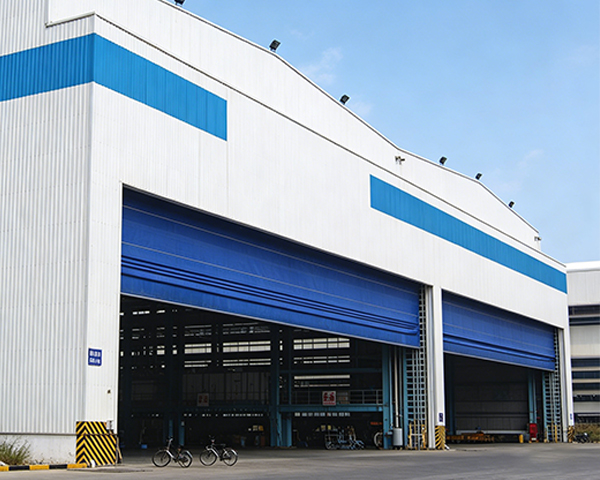
PVC high speed doors are widely used in industrial facilities, warehouses, cold storage rooms, cleanrooms, logistics centers, manufacturing plants, and commercial environments where fast access, energy efficiency, and process control are important. Because these doors open and close frequently, their performance depends heavily on regular maintenance and timely repair. A well-maintained PVC high speed door can help improve workflow, reduce air exchange, protect temperature-sensitive zones, and extend equipment service life.
This guide provides general, industry-focused information about PVC high speed door maintenance and repair. It is designed for SEO-friendly use in blog posts, category pages, service pages, and knowledge base content. The content below explains definitions, common components, maintenance practices, repair steps, troubleshooting points, benefits, technical specifications, and inspection recommendations. No specific company recommendations are included.
A PVC high speed door is a fast-operating industrial door system made primarily with a flexible PVC curtain and a mechanical or automated drive system. Unlike conventional rolling doors or sectional doors, high speed doors are designed to open and close rapidly to minimize heat loss, dust intrusion, air leakage, and traffic delays. The PVC curtain is typically lightweight, durable, and engineered to withstand repeated movement in demanding environments.
These doors are commonly installed at internal passageways, external entrances, production lines, loading zones, freezer areas, and controlled environments. Their primary purpose is to improve operational efficiency while supporting cleanliness, safety, and environmental separation.
Regular PVC high speed door maintenance is essential because these doors are used in high-cycle applications. Frequent operation increases wear on the curtain, guide rails, drive motor, control panel, seals, sensors, and safety accessories. Without preventive maintenance, small issues can quickly become major failures.
Proper maintenance offers several benefits:
In many facilities, the door is part of a larger system that directly affects production flow. For this reason, high speed door repair and scheduled inspections should be treated as part of normal facility management rather than as occasional emergency work.
Understanding the main parts of a PVC high speed door helps with inspection, troubleshooting, and repair planning. Although product designs vary, most systems include the following components:
| Component | Function | Common Maintenance Concern |
|---|---|---|
| PVC Curtain | Provides the flexible door barrier | Wear, tears, scratches, contamination, stretching |
| Guide Rails | Directs curtain movement during opening and closing | Debris buildup, misalignment, damage, friction |
| Drive Motor | Supplies power for fast operation | Overheating, electrical faults, reduced torque |
| Control Panel | Manages operation logic and system settings | Button failure, error codes, wiring issues |
| Safety Sensors | Detects people, vehicles, or obstacles | Misalignment, dirt, communication failure |
| Bottom Bar | Helps stabilize the curtain and improve sealing | Impact damage, deformation, seal wear |
| Side Seals | Limits air leakage and improves environmental separation | Wear, flattening, cracking, poor contact |
| Opening System | Uses radar, pull cord, push button, loop detector, or sensor control | Trigger failure, signal interruption, delayed response |
| Emergency Release | Allows manual or safe recovery in case of power issues | Stiffness, blockage, lack of testing |
Different industrial applications require different high speed door structures. Maintenance and repair procedures may vary slightly depending on the type of door.
| Door Type | Main Use | Typical Features |
|---|---|---|
| Vertical High Speed PVC Door | General industrial passages | Fast vertical opening, compact design, high cycle performance |
| Roll-Up PVC High Speed Door | Warehouses and logistics areas | Door curtain rolls into a compact top box |
| Self-Repairing High Speed Door | High traffic areas with impact risk | Curtain can reinsert itself after minor impact |
| Insulated PVC High Speed Door | Temperature-controlled zones | Improved thermal performance and sealing |
| Cold Storage High Speed Door | Freezers and refrigerated rooms | Low-temperature resistance, anti-condensation design |
| Cleanroom PVC Door | Controlled hygiene environments | Dust control, smooth surface, easy cleaning |
PVC high speed doors are chosen for many facilities because they offer a combination of speed, flexibility, and operational efficiency. Some of the main advantages include:
These benefits make high speed PVC doors especially valuable in environments where door cycle frequency is high and environmental control is important.
A structured maintenance schedule is one of the best ways to keep PVC high speed doors operating smoothly. The exact schedule depends on usage intensity, environment, and manufacturer recommendations, but the following general guide is commonly used in the industry.
| Inspection Interval | Recommended Tasks |
|---|---|
| Daily | Visual inspection, check for unusual sounds, verify opening and closing speed, confirm safety sensors are functioning |
| Weekly | Clean guide rails, check curtain alignment, inspect seals, test manual operation if available |
| Monthly | Inspect motor, fasteners, control panel, sensors, curtain edges, and bottom bar condition |
| Quarterly | Perform deeper mechanical inspection, test emergency features, review wiring connections, lubricate approved parts if required |
| Annually | Comprehensive service review, component replacement planning, performance testing, safety audit |
High traffic doors in warehouses, cold storage, or production lines may require more frequent inspection. In many cases, preventive maintenance is more cost-effective than reactive repair.
During maintenance, technicians should focus on wear, alignment, contamination, electrical integrity, and safety function. The following checklist is useful for general inspection:
A clean and accurate inspection routine helps prevent sudden malfunction and supports long-term door performance.
Like any industrial equipment, PVC high speed doors can experience operational issues over time. Recognizing common problems early can reduce downtime and repair costs.
| Problem | Possible Cause | Typical Fix |
|---|---|---|
| Door does not open | Power failure, control fault, sensor blockage, motor issue | Check power supply, reset controls, inspect wiring, test motor |
| Door opens slowly | Motor wear, low voltage, friction in rails, curtain resistance | Inspect drive system, clean rails, check settings and load condition |
| Door closes unevenly | Curtain misalignment, guide rail damage, bottom bar issue | Realign curtain, inspect rails, repair or replace damaged parts |
| Door reverses unexpectedly | Sensor detection error, obstacle interference, control logic fault | Clean and test sensors, review sensitivity settings, check control system |
| Noise during operation | Loose hardware, rail friction, motor wear, damaged curtain edges | Tighten hardware, inspect moving parts, replace worn components |
| Air leakage around the door | Seal wear, curtain gap, improper alignment | Replace seals, adjust positioning, verify installation accuracy |
| Curtain torn or damaged | Impact, abrasion, aging, improper use | Patch or replace curtain section depending on damage level |
| Sensor not responding | Dirt, obstruction, wiring issue, misalignment | Clean sensor lens, verify connections, realign device |
PVC high speed door repair should always begin with a safe and systematic diagnosis. The goal is to identify the root cause rather than only treating the symptom. In many cases, what appears to be a major failure may be caused by a simple issue such as dirt buildup, loose wiring, or sensor misalignment.
Before performing any repair work, disconnect power where appropriate and secure the work area. High speed doors contain moving parts and electrical components that can create safety risks if handled incorrectly.
Determine whether the issue involves motion, speed, safety response, sealing, noise, or a complete shutdown. Clear symptom identification helps narrow the possible causes.
Examine the PVC curtain for cuts, tears, stretching, contamination, or distortion. Small surface damage may sometimes be repaired, but severe damage often requires panel replacement.
Guide rail problems can cause poor movement, scraping sounds, or curtain misalignment. Clean the rails and inspect them for dents, debris, or mechanical obstruction.
If the door is not running correctly, inspect the motor, transmission, drive shaft, and related mechanical parts. Overheated motors or repeated overloads may indicate deeper system issues.
Sensors are a common source of door malfunction. Clean lenses, check alignment, verify cable integrity, and confirm that the control panel is not showing fault codes or communication errors.
Replace damaged seals, worn curtain sections, failed sensors, or defective hardware as needed. Using worn parts too long may cause repeated problems and reduce door reliability.
After repair, perform multiple open-close cycles to confirm smooth operation, correct speed, proper safety response, and stable sealing performance.
The following repair tasks are frequently performed in industrial environments:
Many of these tasks should be performed by trained maintenance staff or qualified technicians, especially when electrical troubleshooting or major component replacement is involved.
Extending service life is a key objective in high speed door maintenance. A long-lasting door reduces total ownership cost and minimizes operational disruption. The following practices can help improve durability:
Good maintenance habits are often the difference between a door that lasts a few years and one that performs reliably over a much longer period.
The following table shows general technical parameters commonly found in industrial PVC high speed door systems. Actual values may vary depending on application, design, and installation requirements.
| Specification | Typical Range or Description |
|---|---|
| Door Curtain Material | PVC, reinforced PVC, or coated flexible fabric |
| Opening Speed | Approximately 0.8 m/s to 2.5 m/s |
| Closing Speed | Approximately 0.5 m/s to 1.5 m/s |
| Cycle Frequency | Designed for high-cycle industrial use |
| Door Size | Customized according to opening dimensions |
| Motor Type | Industrial electric drive system |
| Control Method | Push button, radar, loop detector, pull cord, remote control, sensor-based triggers |
| Safety Features | Photo sensors, safety edges, obstacle detection, emergency stop |
| Seal Performance | Side seals and bottom seals for airflow control |
| Application Environment | Warehouses, factories, cold rooms, clean areas, loading zones |
The PVC curtain is one of the most important elements of the door system. Its performance depends on thickness, reinforcement structure, transparency, flexibility, and environmental resistance. Industrial PVC curtain materials are generally selected for their ability to resist frequent movement while maintaining stable barrier performance.
| Feature | Purpose |
|---|---|
| Flexibility | Allows high-speed movement without cracking |
| Durability | Supports repeated open-close cycles |
| Transparency | Improves visibility for traffic and safety |
| Reinforcement | Improves tear resistance and structural stability |
| Easy Cleaning | Supports hygiene in controlled environments |
| Environmental Resistance | Helps withstand humidity, dust, and temperature variation |
Safety is always a priority when working with PVC high speed doors. Because these systems combine electrical components, automatic movement, and industrial traffic, proper precautions are essential.
Well-maintained safety systems are not optional. They are a core part of any high speed door maintenance and repair program.
Some issues can wait for planned maintenance, but certain warning signs indicate the need for immediate repair:
When these issues appear, the door should be taken seriously because continued use may increase the damage or create a safety risk.
Reliable high speed door performance is especially important in environments where traffic volume and environmental separation matter. Common applications include:
In each of these environments, the door contributes to traffic control, temperature management, and protection against dust or contamination.
When troubleshooting a PVC high speed door, it is helpful to follow a logical process:
This structured method helps reduce guesswork and supports faster, more accurate repairs.
Preventive maintenance is usually more cost-effective than waiting for a breakdown. Reactive repair often leads to unplanned downtime, rushed parts replacement, and operational disruption. In contrast, preventive service allows teams to monitor wear trends, schedule replacements, and keep inventory of key spare parts.
For facilities that rely heavily on throughput, temperature separation, or hygiene control, a preventive maintenance strategy is often the most practical way to protect door performance and reduce business risk.
Keeping common spare parts available can reduce downtime during repair. A general spare parts list may include:
| Spare Part | Reason to Keep in Stock |
|---|---|
| PVC curtain panel | For tear or impact replacement |
| Safety sensor | For detection failures or wiring damage |
| Side seal strip | For leakage control and wear replacement |
| Bottom bar | For impact damage or bending |
| Control buttons or switches | For operator interface failure |
| Fasteners and mounting hardware | For loose or damaged installation points |
| Motor parts or drive accessories | For drive system service |
PVC high speed door maintenance and repair are essential for keeping industrial operations efficient, safe, and cost-effective. These doors are built for rapid movement, frequent use, and environmental separation, but their long-term performance depends on proper care. Routine inspection, timely cleaning, early fault detection, and preventive replacement of worn components all play an important role in maintaining reliability.
Whether the application is a warehouse, freezer room, production line, or clean environment, a well-maintained PVC high speed door helps improve workflow, reduce energy loss, and support facility safety. By following structured maintenance practices and addressing repair needs quickly, businesses can extend equipment life and minimize operational disruption.
```
เสิ่นหยาง Manlong Metal Products Co., Ltd.


ลิขสิทธิ์ © 2026 Shenyang Manlong Metal Products Co., Ltd. สงวนลิขสิทธิ์ แอปพลิเคชัน
เว็บไซต์นี้ใช้คุกกี้เพื่อให้แน่ใจว่าคุณได้รับประสบการณ์ที่ดีที่สุดบนเว็บไซต์ของเรา

 English
 Español
 Portugues
 Pусский
 Français
 Deutsch
 العربية
 Türk dili
 Tiếng Việt



 โทรศัพท์
ความคิดเห็น
(0)